

Services
Ergometric Testing
- Health Screening
- Cardiorespiratory Endurance
- Physical Fitness Assessment
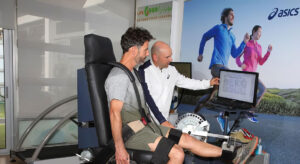
Isokinetic Evaluation
- Muscle Performance Assessment
- Muscle Strength & Endurance
- Muscle Imbalances

Genetic Testing
- Creation of a Personalized Training Program
- Achievement of Maximum Athletic Performance


Personal Training
- Is It Necessary or a Luxury?
- What Exactly Is Personal Training?
- Maximum Results in Minimum Time

Vertimax Speed & Power Training
- Revolutionary Training System with Resistance and Traction
- Low Physical Strain
- Strengthening – Rehabilitation

Training on an Isokinetic Machine
- Injury Prevention
- Post-Surgical Assessment
- Performance Improvement – Objective Measurement
Frequently Asked Questions
- National teams.
- Teams from all sports.
- Teams from all amateur and professional championships.
- Various clubs.
- Sports academies.
- Individual athletes who want to improve their athletic performance.
- People who want to improve their physical condition and body weight.
Both. It is suitable for anyone who takes training a bit more seriously and wants to do actual training rather than just casual exercise. For professional athletes, it is often easier because there is usually a knowledgeable coach guiding them.
For amateurs, however, an ergometric assessment can serve as the foundation for a properly structured training program, adapted to each person’s individual physiological characteristics and personal goals.
For most athletes and individuals being tested, it is the most important parameter for evaluating physical fitness.
It provides information about other key training-related parameters:
- VO2max
- Respiratory Threshold
- Fat Utilization
- Recovery
- Anaerobic Threshold
- Maximum Tolerable Exercise Intensity
- Interval Training
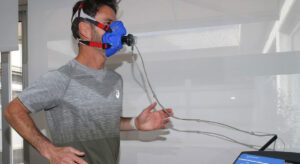
After completing a light warm-up, the person being tested wears a mask that covers the mouth and nose, as well as a heart rate monitor on the chest. Both are connected to devices that record, among other things, heart rate, aerobic capacity, anaerobic threshold, and oxygen consumption.
The speed increases every minute by 0.5 km/h as the assessment progresses. This process lasts approximately 15 to 20 minutes.
The testing area is kept at a low temperature because the measurements must be carried out under specific conditions, according to international standards that define the temperature and humidity values in the laboratory.
- Maximum Oxygen Uptake (VO2max): VO2max is synonymous with endurance. A high VO2max value is also an indication of good health.
- Speed (km/h) or Power Output (watt/kg) at VO2max: This is the maximum speed or maximum power output corresponding to VO2max. It is one of the most practical indicators of an athlete’s aerobic adaptations.
- Anaerobic Threshold: The anaerobic threshold is an important indicator of aerobic endurance. The higher this workload is, and the longer it can be maintained during exercise, the fitter the individual is.
- Energy (Running) Economy: This is defined as oxygen uptake (mL/kg/min) during a submaximal muscular effort. By learning energy economy at each speed, we essentially identify the exercise intensity that should be used in training, both continuous and interval, thereby improving the quality, safety, and effectiveness of training.
- Blood Lactate Concentration: Lactate is an acidic by-product of muscle metabolism and makes muscle contraction more difficult. It is measured either at the end of a maximal effort, during a submaximal effort, or during a VO2max test to identify the anaerobic threshold.
- Pulmonary Ventilation (Vmax): This refers to the flow of air volume in and out of the lungs. Although there are no absolute reference values, values below 70–60 L/min during maximal effort, depending on gender, body measurements, and type of exercise, may indicate a problem with respiratory capacity.
- Maximum Heart Rate: Knowing this value helps us prescribe and monitor exercise properly.
- Calorimetry and Carbohydrate Consumption: From oxygen consumption measurements, we can calculate the calories burned at each exercise workload. In addition, the quantitative and relative consumption of carbohydrates and fats is calculated, providing important information about energy economy. This also leads to safe conclusions regarding the amount of carbohydrates that should be consumed during efforts lasting more than one hour, such as marathons, cycling brevets, sailing races, etc. We can also measure resting metabolic rate.
Ergometric testing is an essential tool in the athletic journey of every person who exercises, as it helps them design training that is more effective for their individual needs. In addition, it helps them discover their current level of physical fitness.
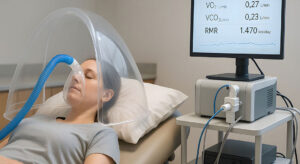
Metabolism is the biochemical process through which oxygen reacts with nutrients, resulting in the production of the energy our body needs to function. Metabolism is measured in kilocalories (kcals), or more commonly, calories.
Resting Metabolic Rate (RMR) represents the calories our body uses to perform its vital functions, such as heart rate, brain function, and breathing. More simply, it is the number of calories a person burns daily while awake but at rest.
RMR can account for up to 75% of the energy needs of the modern individual.
Resting Metabolic Rate is traditionally determined through direct or indirect calorimetry.
Direct calorimetry requires precise measurement of the total body heat produced, using large, expensive, and technologically complex machines.
Indirect calorimetry determines metabolic rate based on the oxygen consumed by the body.
Traditionally, oxygen consumption measurements were carried out using large, stationary, high-cost devices (metabolic carts), which require periodic maintenance, calibration, and specialized personnel to operate. In recent years, however, portable or desktop devices based on advanced technology have become available. These lower-cost devices accurately measure oxygen consumption and determine an individual’s energy requirements.
Measuring oxygen consumption, instead of relying on equations for the general population, allows health and exercise professionals to make accurate decisions for their clients. With a simple breathing test lasting 10–15 minutes, we measure metabolism in order to determine a personalized caloric balance.
The success and safety of any training intervention are based on personalization. Every athlete or exerciser is unique, with different strengths and weaknesses, which requires a tailored approach to training.
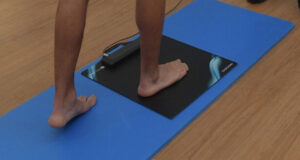
However, there are certain performance standards that are useful to achieve. These may relate either to general health recommendations or to improving effectiveness, competitiveness, and injury prevention in a specific sport. They usually represent specific performances in fitness tests, such as the vertical jump in the NBA, which have been scientifically documented as important indicators of athletic performance, health, and functional ability, for example maximum oxygen uptake (VO₂ max).
Equally important is the systematic monitoring of the training process throughout the year. Is the program effective? Are modifications needed? Continuous evaluation and adjustment ensure optimal progress and the maximum possible benefits for the athlete.